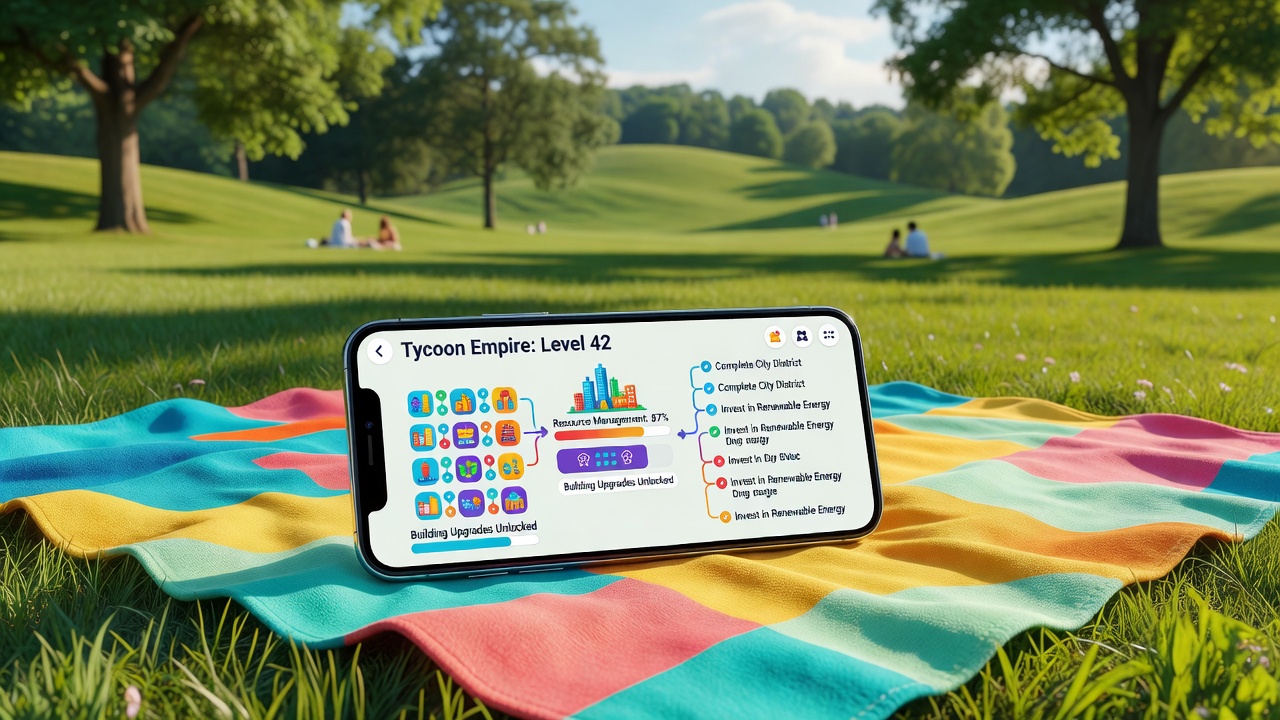
In the realm of mobile tycoon games, from pizza parlors to interplanetary shipping companies, the core gameplay loop is identical. The visual wrapper changes, but the underlying mathematical framework—the 'treadmill'—remains a masterclass in psychological conditioning.
The Core Loop Anatomy
Every successful tycoon game operates on a simple, infinitely repeating cycle:
- Generate: Produce a primary resource (e.g., cash).
- Identify Bottleneck: The player notices a station or process is slowing down overall generation.
- Upgrade: Spend resources to clear the bottleneck.
- Shift Bottleneck: The upgrade causes the next step in the chain to become the new bottleneck.
Developer Insight (The 'Whack-a-Mole' Effect)
Good tycoon design ensures that solving one problem immediately highlights another. If the player upgrades their 'Order Taker' speed, suddenly the 'Chef' is too slow. Upgrading the Chef makes the 'Delivery Driver' the weak link. This constant shifting of focus prevents the game from feeling solved.
The Psychology of Prestige
Eventually, the cost to upgrade becomes exponentially higher than the resource generation rate. Progress grinds to a halt. This is "The Wall."
To overcome this, games employ the Prestige System (also known as Rebirth or Ascension). The player resets all their progress back to zero, but in exchange, they receive a permanent global multiplier.

Why Players Accept the Reset
Logically, destroying hours of work sounds terrible. Psychologically, it's brilliant. By resetting, the player gets to re-experience the rapid, constant dopamine hits of the early game, but at a vastly accelerated pace due to the multiplier. They smash through their previous "Wall" with ease, experiencing a profound sense of power and growth.
UI as a Weapon
The visual feedback in tycoon games is heavily engineered. Buttons turn a vibrant green and pulse when an upgrade is affordable. Numbers don't just increment; they bounce. The UI is designed to minimize friction; you don't 'buy' an upgrade, you tap an ever-present, brightly colored rectangle.
Next time you find yourself managing a virtual business, look past the graphics. Watch the numbers, identify the bottlenecks, and recognize the masterful mathematical trap you've willingly stepped into. It's not just a game; it's a beautifully tuned progression engine.